
Top 5 Wheezeless Alternatives in 2026
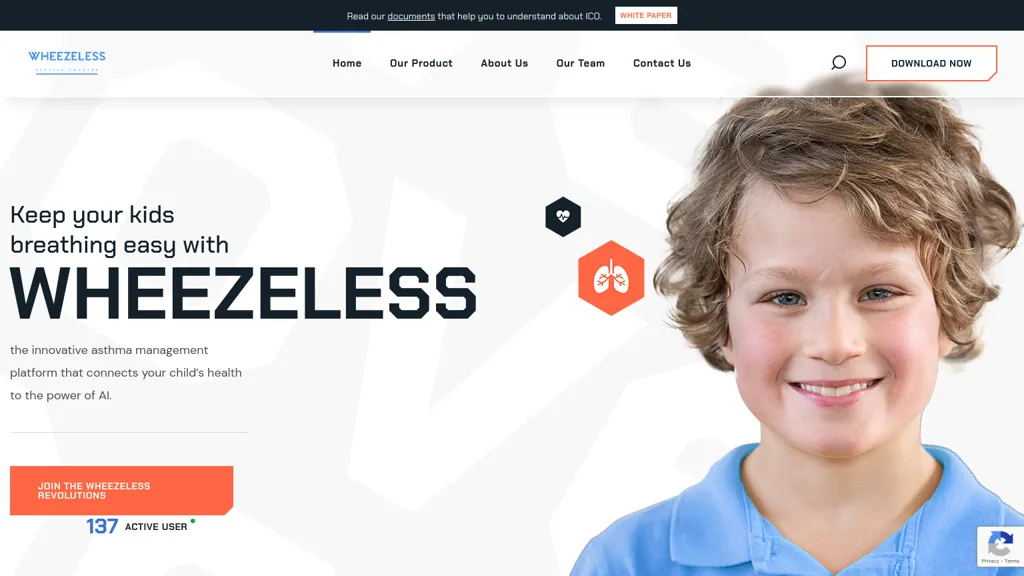
No user reviews yet SubscriptionWheezeless uses AI to monitor children’s breathing, air quality, and humidity, detecting asthma risks in real time. It delivers personalized risk assessments, medication reminders, and secure data dashboards for caregivers and clinicians.
We've ranked 5 Wheezeless alternatives, including 3 with a free plan. Rankings are based on feature coverage and user feedbacks.
Top-rated alternatives include AI Eczema App, MOUTH BREATHER, and Baani AI.
5 Wheezeless Alternatives & Competitors, Ranked by User Reviews
Click Compare on any tool to compare it side-by-side with Wheezeless.
 #1
AI Eczema App
#1
AI Eczema App
Eczemaless is an AI‑powered eczema app that scores skin lesions from photos, identifies food triggers, monitors weather conditions, and tracks personalized treatment adherence. Its dashboards visualize severity trends and users can export comprehensive, multilingual reports.
 #2
MOUTH BREATHER
#2
MOUTH BREATHER
MouthBreather is a local AI tool that monitors mouth breathing habits through lip position detection, providing real-time sound notifications and insights to encourage healthier breathing practices while ensuring user privacy with offline functionality.
 #3
Baani AI
#3
Baani AI
AI-driven IoT device management platform that automates discovery, inventory and secure onboarding, offers real-time monitoring, visual analytics, ML-based anomaly detection and predictive maintenance, role-based security, APIs for integrations, mobile/web access, alerts and exportable reports.
 #4
PharmaTrace
#4
PharmaTrace
Chronic Diseases AI predicts chronic‑condition risk, forecasts medication demand, and optimizes supply chains using machine learning. It records transactions on blockchain, automates contract‑based payments, supplies clinical decision support, and streamlines patient recruitment and budgeting for research.
 #5
Health Links AI
#5
Health Links AI
Lavaa Intelligence Platform offers a risk assessment system for healthcare stakeholders, featuring real-time alerts, personalized care pathways, and AI-driven resource allocation to enhance patient management, improve outcomes, and support value-based care principles.